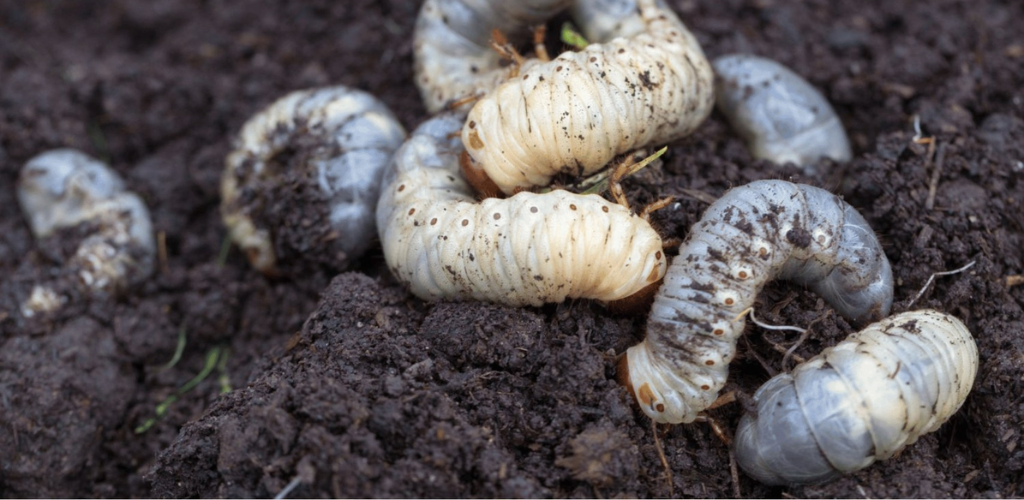
Identification and Damage
- Beetle grubs: attack roots, turning lawns yellow.
- Otiorhynchus grubs: gnaw roots and leaves.
- Difference: humped = yellowish body, large head; ketone = white, small head, bulky back.
Natural Prevention
- Remove grubs by hand when digging.
- Encourage predators (birds, hedgehogs, moles).
- Maintain a robust lawn:
- Mow less frequently (8-10 cm in summer).
- Sow clover, fescue, and bluegrass.
- Water evenly but deeply.
- Avoid excess nitrogen.
Control: Nematode Control
- Use Heterorhabditis bacteriophora.
- Dosage: 5 μM of nematodes/10 m2, up to 500 μM/1000 m2.
- Dissolve in water and water the soil.
Application Periods
- Otiorhynchus: fall + spring.
- Chafer: winter, repeat 3 consecutive years.
Optimal Conditions
- Soil between 12°C and 25°C.
- Water before and after treatment. Keep moist for 1 month.
- Apply in the morning, evening, or on a cloudy day.
Advantages of Nematodes
- Safe for beneficial insects, crops, animals, and humans.
- Sustainable action thanks to its multiplication in larvae.
An effective, ecological, and sustainable method for protecting gardens and orchards against white grubs.